
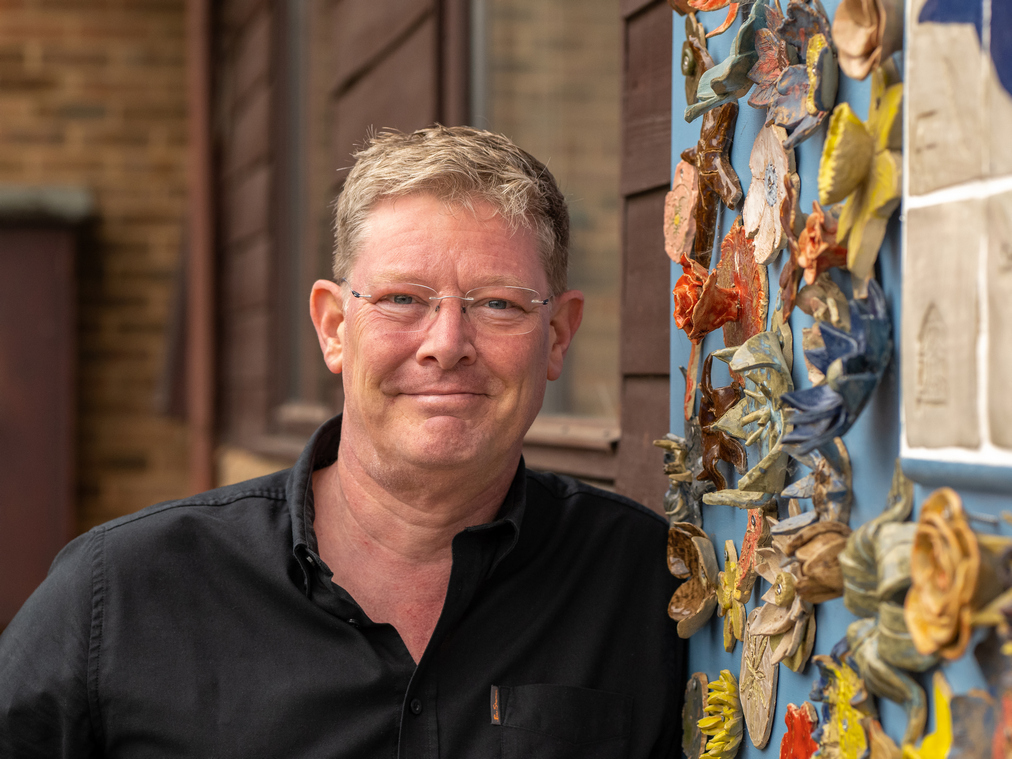
Tim Davies announced as a finalist for the Transformational Leader at the MK Community Foundation Charity Awards
We’re so pleased to announce that our CEO, Tim Davies, has been shortlisted as a finalist for Transformational Leader (in memory of Carol Baume) at the MK Community Foundation Charity Awards. Camphill MK is also a finalist in the Equity and Inclusion Award in Memory of Ranjit Singh.
For Tim to be announced as a finalist is a tremendous achievement. Tim is one of just three leaders shortlisted across Milton Keynes. It’s a real recognition not just of Tim, but of the difference Camphill MK is making in the wider community.
Over the past 12 years, Tim has led Camphill MK from a small and quite fragile charity – 15 staff supporting around 40 residents – to the thriving organisation we are today. We’re now a £5m charity, supporting more than double that number of people, helping shape national practice, and showing what truly inclusive communities can look like.
What’s especially stood out over the past year is the work on our new accessible homes. In response to the shortage of safe, appropriate housing for adults with learning disabilities, Tim has led our most ambitious project yet – securing £3.3 million to build a new, purpose-designed home. This isn’t just about buildings. It’s about long-term security, dignity, and independence. These homes will support people not just now, but for years to come – with the flexibility to adapt as people’s needs change, so they can stay in a place they truly call home.
Alongside this, Tim’s influence stretches well beyond Camphill MK. As Chair of the Association of Camphill Communities in England and Wales, he’s supporting other organisations through change, sharing learning, and strengthening the sector as a whole. Locally, his role on Milton Keynes City Council’s Joint Leadership Team means he’s helping represent and advocate for the voluntary sector at a strategic level.
And the results speak for themselves. Over the past two years, we’ve grown our income by 20%. In our 2025 staff survey, 98% of you said you enjoy coming to work, and 100% said you understand and feel aligned with our values and purpose.
Tim leads in a quiet, thoughtful way – listening carefully, acting decisively when needed, and always keeping people at the heart of decisions. Under his leadership, Camphill MK hasn’t just grown – it’s become stronger, kinder, and more resilient.
We think that’s something we can all feel proud to be part of. Well done, Tim!
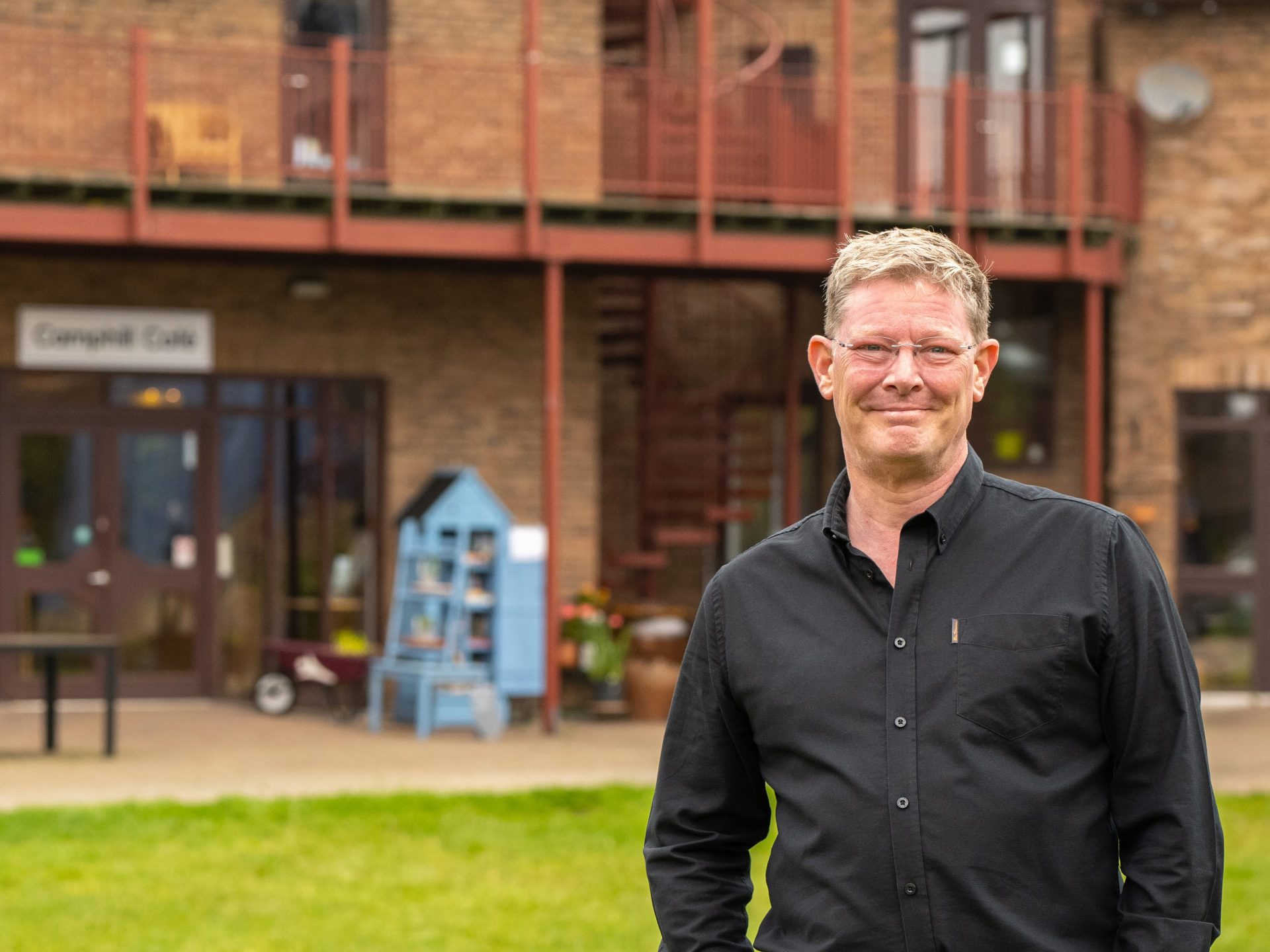
Here is the narrative that went with Tim’s nomination:
What activities have you carried out that make you deserving of this specific award? (Tell us all about the projects or activities that you undertook to make life better in Milton Keynes in this area.)
At Camphill MK, inclusion is not a policy — it is a lived experience. Everything we do is designed to remove barriers, challenge assumptions, and create environments where people with learning disabilities, staff, volunteers, and visitors can belong on equal terms.
Over the past year, we have focused on widening access to employment, tackling hidden exclusion, and creating opportunities for people who are often overlooked.
With unemployment rising locally, we intentionally positioned ourselves as an entry point into work for people with little or no formal experience but strong human values — kindness, patience, reliability and curiosity. This approach has enabled us to reach a more diverse workforce, often including people for whom English is a second language. For example, in 2023 alone, we recruited 60 new staff members, 18 of whom had no prior relevant employment.
This is not tokenistic inclusion. Every member of staff is offered full training, including care qualifications where relevant, and ongoing professional development. Many progress to senior roles within the organisation, demonstrating that inclusive recruitment can also be a powerful route to social mobility.
One of the key challenges to inclusion is of psychological safety of expressing our perceived “difference” and we have worked hard to model this, through our board of trustees, leadership team and staff teams. Encouraging and persevering in addressing and identifying issues where we can improve, and learning from each other.
We also recognise that financial and practical barriers often prevent people from accessing work or sustaining employment. Despite paying the Real Living Wage, we know that the cost-of-living crisis continues to hit many people hard. To address this, all staff receive a free daily meal, either within the houses or from our bakery. We also operate a fleet of vehicles so that people are not excluded due to a lack of personal transport.
For residents, inclusion means more than participation — it means agency. Many adults with learning disabilities experience financial vulnerability, social isolation, and limited autonomy. At Camphill MK, residents are supported to understand and manage their money, while knowing that their basic needs — housing, food, activities and care — are secure. This safety net allows people to take risks, try new things, and develop confidence.
We also prioritise physical and mental wellbeing as a foundation of inclusion. With obesity and poor health disproportionately affecting deprived communities, we run inclusive clubs in running, cycling, swimming, and dance that are open to residents and staff alike. These shared experiences break down hierarchies and foster genuine relationships.
How has your work in the past year enriched Milton Keynes’ cultural life or preserved its heritage, and what difference has this made to the community? (Here we’re looking for the evidence – data, testimonials – that your activities made life better in this area.)
Camphill MK plays a unique role in Milton Keynes’ cultural ecosystem by ensuring that disabled people are not just audiences, but creators, collaborators, and cultural contributors.
Through our theatre, workshops and public events, residents regularly perform, exhibit, and share their work with the wider community. Our café is not just a workshop or business — it is a meeting place where people from all backgrounds interact naturally, challenging stereotypes and building understanding.
In the past year, hundreds of members of the public have attended performances, workshops and open events at Camphill MK. These experiences create moments of genuine connection, shifting perceptions of disability from limitation to creativity, contribution and value.
Families frequently report that these opportunities have transformed how their relatives are seen — not as service users, but as artists, colleagues, and friends.
In 2025, residents prepared Access Guides for IF: Milton Keynes International Festival, undertook mystery shopping at centre:mk and Camphill MK led a city-wide event to celebrate disabilities through Disability Awareness Day. This event brought together 8 different charities and disability providers, attracted more than 300 attendees and enabled people with disabilities to celebrate together through dance, song, craft and food.
How has your organisation demonstrated leadership in inclusion over the past year? (Please give examples of how you’ve made your services, culture, or opportunities more equitable and welcoming, and how this has affected take-up for your projects and activities.)*
Our leadership in inclusion is rooted in systems change, not symbolism.
We design roles, routines, and environments around people’s strengths, rather than forcing individuals to fit rigid structures. This has led to higher retention, stronger relationships, and a culture of mutual respect.
We embed inclusive decision-making into daily life, involving residents in household choices, creative planning, and community activities. Staff are trained not just in care tasks, but in relational, trauma-informed and strengths-based approaches.
Importantly, we model inclusion outwardly. By opening our spaces to the public, collaborating with local organisations, and employing people from diverse backgrounds, we act as a visible example of what inclusive communities can look like.
We aim to influence partners and colleagues in the sector and our statutory partner team (NHS, ICB and City Council). Providing leadership support to our local authoritty review of their of equality and diversity procedures and process and sharing learning from attendance and participation in the NHS England Diversity in Health and Care partners programme as a co-opted partner with BLMK ICS.
The practical result is a place where people are not labelled, segregated or marginalised — but known, valued, and welcomed.
In a world where many adults with learning disabilities or autism still experience profound isolation, Camphill MK demonstrates that a different future is possible: one built on belonging, dignity and shared humanity.
Related Posts
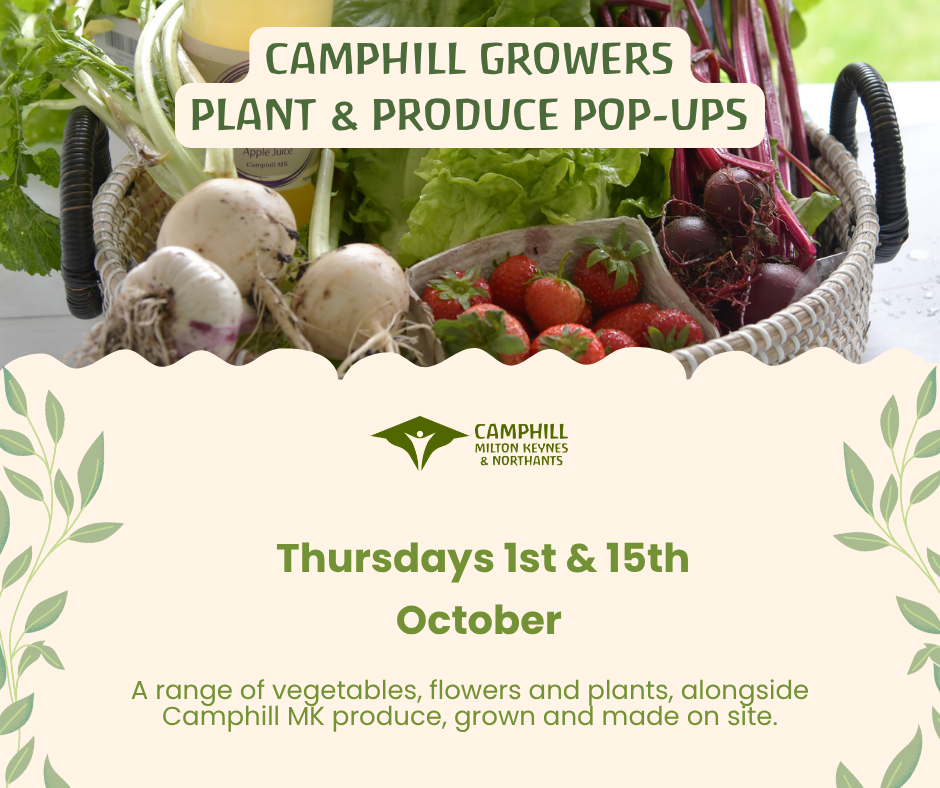
Camphill Pop-Up Plant & Produce Sales
Our fortnightly Camphill Growers pop-up plant & produce sales have been very popular! Our gardening
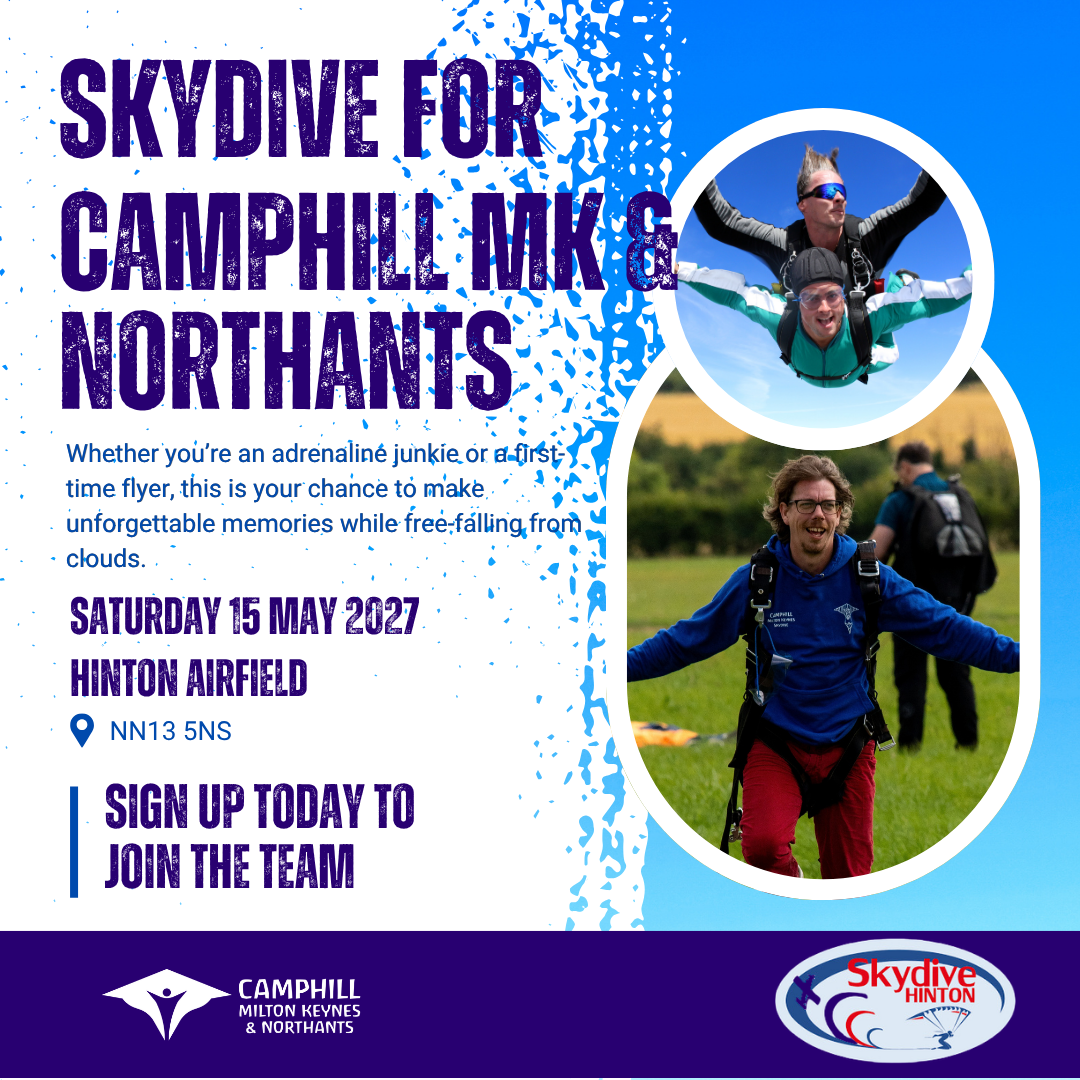
Skydive for Camphill MK & Northants!
Fancy skydiving for Camphill MK & Northants? We’re again taking on the sky-high challenge on